




Inside the Foam: How Modern Running Shoes Are Really Made
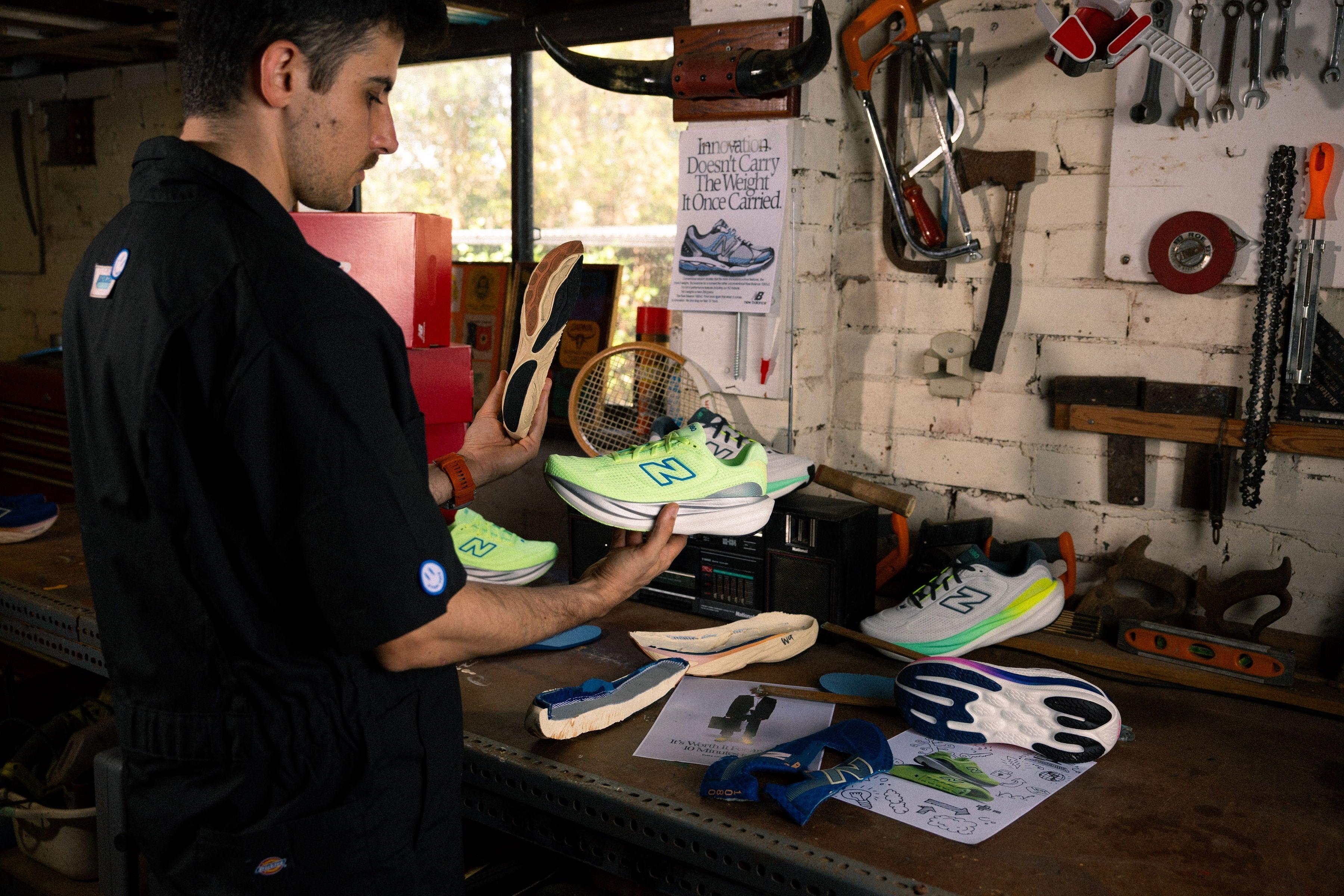
In a dark, cluttered workshop filled with half-dissected midsoles, scribbled notes, and tools that look more at home in a lab than a retail store, this is where Lex (Pace Athletic’s resident shoe nerd) disappears. It’s part Bowerman-esque tinkerer, part obsessive footwear analyst. Every detail matters. Every material has a reason.
If you’ve ever wondered why one running shoe feels flat, another feels bouncy, and another somehow manages to feel both cushioned and lively, the answer almost always lives in the midsole.
This article exists to demystify midsole foams (what they are, how they’re made, and why they feel the way they do) written in plain English, without marketing fluff or unnecessary jargon. It’s informed by someone who genuinely obsesses over footwear: the kind of person who cuts shoes in half, reads material patents for fun, and wants to understand why something feels good, not just that it does.

Why Foam Matters More Than Ever
The biggest changes in running shoes over the last decade haven’t been uppers, lacing systems, or aesthetics; they’ve been midsole materials.
The four big factors a midsole dictates are: :
-
how soft or firm a shoe feels
-
how much energy you get back
-
how long the shoe lasts
-
how versatile it is across paces
Understanding foam helps explain why two shoes with similar stack heights can feel completely different.
Let’s break it down.

1. EVA // The Foundation
What it is (the science)
EVA stands for ethylene-vinyl acetate, a lightweight polymer foam created by blending ethylene and vinyl acetate. It’s been the backbone of running shoes for decades.
What it feels like
Comfortable, forgiving, predictable.
EVA absorbs impact well and creates that familiar “cushioned” feeling most runners associate with a daily trainer.
Where you will see it? Classic daily trainers, stability shoes and entry-to-upper-mid level running shoes
Examples (for context)
Many traditional versions of:
-
ASICS Nimbus (earlier gens)
-
Brooks Ghost / Adrenaline (historically)
-
New Balance 880
Lex’s Notes
“EVA certainly isn’t bad foam… it’s honest foam. It’s reliable, easy to tune, and still makes up a huge portion of what runners wear every day.”
EVA still plays a massive role in running footwear. Especially where comfort, accessibility, and durability matter most.
2. Supercritical EVA // Refining the Formula
What it is (the science)
Supercritical EVA uses the same base material, but it’s processed under extreme pressure and temperature using supercritical gases. This creates smaller, more uniform foam cells.
What it feels like
Lighter than traditional EVA foam , with smoother transitions and a more ‘snappy’ feel with more rebound.
Where you will see it? Premium daily trainers, lightweight stability shoes, versatile do-it-all trainers
Examples
-
ASICS FF Blast / FF Blast+ (variations)
-
New Balance Fresh Foam X (select formulations)
-
Nike React (supercritical-influenced processes)
Lex’s Notes
“This was the first big step where daily trainers stopped feeling flat over time. It’s still EVA; just engineered better.”
Supercritical EVA bridges comfort and performance without alienating runners who want something familiar.

3. PEBA // Performance-Driven Energy Return
What it is (the science)
PEBA (polyether block amide) is a different polymer entirely. It’s naturally lighter and more elastic than EVA, allowing for significantly higher energy return.
What it feels like
Springy , bouncy , lively and more ‘at home’ at faster paces. Think mini-trampoline pads under your feet built for a good time rather than a long time.
Where you will see it? Racing shoes, Tempo Trainers, High-end plated and performance shoes
Examples
-
Nike ZoomX (PEBA-based)
-
Saucony PWRRUN PB
-
New Balance FuelCell (PEBA blends)
Lex’s Notes
“PEBA changed expectations. Once runners felt that pop, it redefined what ‘fast’ felt like.”
PEBA is incredible, but it often comes with trade-offs in durability or cost, which is why it’s historically been reserved for race-day or faster shoes.

4. ATPU // Aliphatic TPU (The Current Frontier)
What it is (the science)
ATPU stands for Aliphatic Thermoplastic Polyurethane, a highly refined form of TPU engineered specifically for performance midsoles.
Earlier TPU foams delivered energy return but were often heavy (think early Adidas Boost-era shoes). ATPU solves that problem by dramatically reducing weight while preserving rebound and durability.
What it feels like
Highly responsive, springy without feeling unstable, durable under repetitive loads.
Where you will see it? Interestingly , you see this foam isnt limited to one category . You’ll find it in a couple of the latest daily trainers but also in elite racing shoes
Examples
-
New Balance 1080v15 (Infinion foam)
-
PUMA Fast-R Nitro Elite 3
-
Select next-gen performance trainers and racers
Lex’s Notes
“This is the most versatile foam I’ve worked with. It can be tuned soft, firm, fast, or protective , which is why you’re starting to see it everywhere from daily mileage to elite racing.”
That versatility is what makes ATPU such a big deal. It’s not replacing EVA or PEBA , it’s expanding what’s possible across categories.
Why This Matters for Runners
We’re at a point where foam choice isn’t just about softness; it’s about how a shoe fits into your rotation.
|
Foam |
Best For |
|
EVA |
Comfort, accessibility, easy miles |
|
Supercritical EVA |
Daily versatility, durability |
|
PEBA |
Speed, racing, high energy return |
|
ATPU |
Versatile performance across paces |
This is why seeing ATPU in traditionally “boring” daily trainers is exciting. It brings race-level material science into everyday running.

Where the 1080 Fits // And Why v15 Is Different
The New Balance 1080 has always been the brand’s flagship daily trainer. Not the loudest. Not the fastest. But dependable, comfortable, and trusted by runners who log serious mileage.
Historically, the 1080 sat firmly in the “premium comfort” lane, with a cushioned forgiving predictable neutral ride.
That consistency is why it became one of the most recognisable daily trainers in running.
What Changed with v15
By introducing ATPU into the 1080, New Balance made a clear statement:
This shoe isn’t just about soft anymore.
It’s about modern performance, without losing its soul.
Putting ATPU into a daily trainer shows that NB aren’t resting on legacy or treating ‘boring’ as acceptable.
This new materials bridges the gap between daily trainer, super trainer and long run companion

Lex’s Notes
“The interesting thing isn’t that ATPU exists, it’s where brands are choosing to use it. Putting this foam into a daily trainer tells you they’re thinking about the next decade, not the last one.”
Final Thought
Running shoes haven’t just changed shape, they’ve changed chemistry.
And when a material like ATPU starts appearing everywhere from race shoes to daily trainers, it’s a sign the category is shifting again.
This isn’t about trend but rather its about progress
And sometimes, the most interesting changes happen in shoes that don’t shout, they just quietly feel better.
The next generation of comfort arrives January 15th.
Learn more about the New Balance 1080v15 here or shop in-store or online at Pace Athletic.